Q2 Retrospective – From Acceleration to Execution in the Defence and Sustainable Aerospace Sector

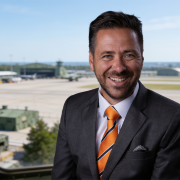
Where the first quarter showed intent turning into engagement, the second quarter has been defined by direction, acceleration and deepened engagement. With the publication of the 2026 Defence White Paper (Defensienota 2026), the Netherlands set out a clear course for how it intends to strengthen its armed forces in the years ahead. Drawing on our work in the field, Managing Partner Michel van Ierland reflects on the developments of Q2.


A clear course: Defence White Paper 2026

The defining moment of the quarter was the presentation of the 2026 Defence White Paper. It marks a clear shift in how the Netherlands approaches national security: heavy investment in unmanned systems and drones, greater attention to defence in space and a national satellite capability, and a stated ambition to bridge the gap between the laboratory and the front through a new innovation and scaling authority.

As reflected in our recent coverage in Het Financieele Dagblad, the direction is unmistakable, and it places collaboration, longer-term contracts and strategic partnerships between Defence, industry and knowledge institutions at the centre of the agenda. As the White Paper itself states, scaling up and increasing readiness will require the full commitment of military personnel, civilian staff, reservists and industry. We consider the addition of industry as a fourth pillar an important step.

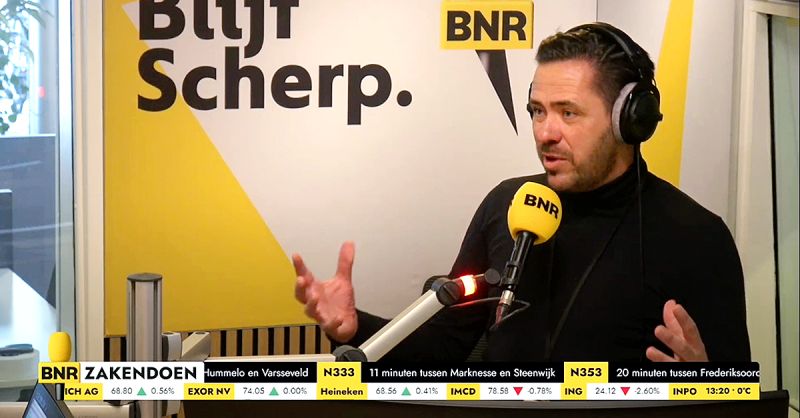
What also stands out to us is how directly this connects national security to national earning capacity. Strengthening the armed forces is no longer viewed in isolation. It is more and more understood as an investment in the Dutch industrial and knowledge base as well (listen also the interview with Michel on Radio 1 in May this year).


From ambition to execution

The Defence White Paper’s emphasis on longer-term, strategic partnerships is precisely where the movement from ambition to execution becomes tangible, and it is exactly the space in which we work. Over the past quarter, we have continued to support organisations in taking their next concrete steps: meeting the required standards, positioning themselves within the value chain, and formalising the partnerships that the Defence White Paper now explicitly calls for.

A clear example is the strategic partnership between Fokker and the Royal Netherlands Air Force, intended as a backbone for CLRS acceleration.

A highlight of the quarter was the SeaSEC Data2Sea Challenge in Rostock, where we teamed up with Axient Systems as system integrator. A consortium of sensor providers, platform builders and data companies jointly protected an offshore converter platform — and in just three months, we integrated more than 15 companies, delivered data fusion and analysis, and created with the team a ‘fighting’ C2 system.

For the Royal Netherlands Navy, Q2 marked the entry into service of the civilian helicopter training ship from SeaOwl and the start of training for RNLN pilots on board. Unified International acted as liaison between SeaOwl and the Royal Netherlands Navy, with one clear goal: a smooth and timely introduction of the ship so aircrews could start meaningful shipborne training as planned.


What stood out: Securing strategic interests

What struck me most this quarter was the seriousness with which the state is now approaching sovereignty over its defence-technology base. The discussion around the option of a ‘golden share’ in promising defence companies (a means of safeguarding national security and preventing unwanted foreign takeovers) signals a genuine shift. It is no longer only about capability, but about who controls it and secures it given the importance of strategic autonomy for the Netherlands (EU).


Looking ahead 

We enter the summer with momentum, but also with a realistic view of the season ahead. Q3 will have the emphasis on continuity: carrying the partnerships and programmes of the past quarter into steady execution rather than announcing new ambitions for their own sake.

The team at Unified International is proud to contribute, across multiple projects, to the defence force of tomorrow. That is what we have done this year and what we will continue to do. But first, after a busy first half of the year, it is now time to return to our family, friends and loved ones and enjoy a few weeks of summer leave.


Closing reflection

The framework is now in place. The task for the months ahead is to valorise it — to turn the already sleeted partners the MoD has selected into meaningful and reliable lasting partnerships, and ambition into capability that reaches the people who depend on it.
Michel van Ierland
Managing Partner, Unified International

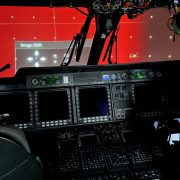
Handover of the Upgraded NH90 Full Mission Trainer

Since 2012, the Royal Netherlands Air Force has operated an NH90 simulator, enabling crews to train under a wide range of conditions. After more than 25,000 simulated flight hours flown by Dutch and international crews, a major upgrade was needed to keep the system current and operationally relevant. Over the past four years, this work has been carried out by a project team from COMMIT, CLRS and Unified International, together with the contractor CAE Inc. The handover ceremony for the upgraded NH90 Full Mission Flight Trainer (FMFT) is completed.

During this period, a Unified International specialist with extensive operational and technical knowledge of the NH90 helicopter has assisted and advised COMMIT during the development, build and acceptance of the NH90 Full Mission Flight Trainer. With the Ready For Training milestone now achieved, training in the upgraded simulator can begin.

To be well prepared for operations, helicopter crews must train intensively. In most simulators, aircraft and helicopter cockpit crews primarily learn to handle systems and emergency procedures. That, however, is only one part of what the upgraded NH90 simulator offers. From mission preparation and decision-making through to actual execution, it is essential that every aspect of an operation can be rehearsed realistically.

The simulator makes it possible to train a wide range of operational scenarios, including anti-submarine warfare, surface warfare and counter-narcotics operations. Training takes place under the direct supervision of an instructor, with each mission analysed and evaluated in detail afterwards so that lessons learned are put to the fullest use. The quality of the simulator is so high that the hours flown count fully as real flight hours.

Large-scale modernisation
After the existing simulator building was adapted last December and the old simulator and other hardware were removed, the five-month installation began in January at Maritime Air Station De Kooy. Work ran in multiple shifts, from early morning until late at night, to bring everything online on schedule. Not only the cockpit, but also all computer systems and instructor stations have been completely renewed.

At CAE, around 300 employees across 50 technical teams worked on the development and delivery of the system. The work was carried out in close cooperation with COMMIT and CLRS. The partly expanded and renewed team of Squadron 7, responsible for supporting the simulator, is now operational and ready to begin training. The team is supported in this by specialists from the NLR for the further development of new training scenarios.

Rear Crew Trainer temporarily adapted
The simulator consists of two main components: the Full Flight Trainer, or cockpit, and the Rear Crew Trainer, the rear section of the helicopter where the sensor operators work. Owing to a delay in the delivery of a new building extension, the Rear Crew Trainer could not yet be installed in its final configuration. In consultation with the user and the manufacturer, COMMIT decided not to delay putting the simulator into service. A temporary solution was developed in which the sensor stations and associated hardware were removed from the Rear Crew Trainer and set up in a separate room. Once the new extension is ready, the simulator will be fully assembled and installed in its definitive configuration.

Thanks to this temporary solution, the Ready For Training milestone has been achieved, and training with full crews in the upgraded simulator can already begin.

Unified International wishes every pilot, sensor operator and instructor who will train in it every success, along with the Squadron 7 team supporting the simulator and the NLR specialists who continue to develop new training scenarios.

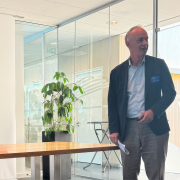
Interview with Marco – Four Months at Unified International, After 40 Years at Defence

Four months into his new role at Unified International, Marco Kievit brings a unique perspective: 40 years of Defence, seen from the inside. With a career spanning complex international aviation programmes, operational roles and a posting as Defence Attaché in Rome, he has built up a deep understanding of how Defence thinks, decides and operates. Now at Unified International, he puts that knowledge to work at the intersection of Defence and industry, helping both sides understand each other, align their interests and move forward together. In this follow-up interview, Marco reflects on the transition, the realities of collaboration, and what drives him.


You started at Unified International in February, so four months now. How are you experiencing work outside Defence, for the first time in 40 years?
First of all, you have to get used to no longer wearing a uniform and having to sign in as a visitor at Defence sites. That immediately makes clear that you are no longer a Defence employee. Beyond that, the experience at Unified International has been very positive so far. Many colleagues have a Defence background, so the Defence culture is present within the company as well. I also notice that there is genuine appreciation for the knowledge and experience you have built up through Defence. And there is plenty of room to take initiatives. The assignments I am working on tend to offer a win-win situation for the client, industry and Defence alike. These are all aspects that make me look forward to head to the office.

How are you applying the experience you gained at Defence to your work with industry?
I primarily represent the client’s interests, but I also try to align these with the interests of Defence. My experience makes it easier to translate the Defence perspective on specific issues, and its associated requirements, to the client. That is enormously helpful in bridging the two sides and increases the likelihood of successful collaboration between Defence and Defence-oriented companies.

One example is the need of Defence for scalability. Companies can and want to play a role in this, but they also need to keep their commercial interests in mind. With the Defence knowledge and experience within Unified International, we can act as the link between Defence and companies on an issue like this.

When you joined Unified International, you said that continuous innovation and close collaboration with knowledge institutes and industry are essential for European Defence. How realistic is that collaboration in practice, is there friction? What works well?
Within the Dutch Defence landscape, the concept of the “triple helix” (or the Defence ecosystem) has been discussed for some time: the idea of government, industry and knowledge institutes working closely together. Considerable effort has been made in recent years to improve this ecosystem, also at a European level, but we are not there yet.

Successful collaboration requires a long-term vision and commitment from all parties involved. That must ultimately translate into concrete assignments and the funding required to support them. The willingness to work together is there, but it needs to become more concrete. Both in the form of long-term assignments and the securing of the necessary financing.

After 40 years in Defence, where do you see the biggest differences between the knowledge held by industry and by Defence?
Defence is an end-user and builds up extensive operational knowledge and experience through the deployment of weapons systems. The expertise of the industry lies primarily in developing and producing those systems. Defence historically tends to focus on off-the-shelf procurement. That is still partially true today, but there is now far greater attention to innovative products. Developing new products requires a different kind of relationship with the industry. Defence will need to share its operational knowledge and experience, and the industry will need to translate the operational lessons into new or improved solutions. Knowledge institutes play an important role in this, but so does a company like Unified International, acting as the link between Defence and industry.

You fell in love with Italy during your posting in Rome. What do you miss most, and what do you bring with you to your work at Unified?
Italy is a young country, but with an extraordinarily rich history. Every region has its own culture and is proud of it. Being aware of cultural differences and handling them in a pragmatic way was very important in my previous role. I carry that with me at Unified International, given that we too operate in an international arena where cultural differences come into play.

What would you like to focus on in the period ahead at Unified International?
From within Unified International, I have a clear view of the challenges that Defence and industry face in the years ahead. I am already involved in several cases where we work together with industry and Defence to overcome those challenges. It is enormously motivating to play a role in breaking down barriers to collaboration and supporting new opportunities for partnership.

Q1 retrospective – From momentum to movement in the defence and sustainable aerospace sector

The first quarter of this year makes one thing clear. The defence sector is moving and the relevance and opportunities to contribute for Dutch and European companies are growing rapidly, for established and also cross-sectoral new players the opportunities are there for the long run. Drawing on our work in the field, our CEO Michel van Ierland shares his reflections on the developments in Q1.

What stands out to us is how this movement is translating into concrete engagement with companies. Across our work, we see a clear increase in organisations actively exploring their role within the defence ecosystem, varying from scale-ups to established firms and financial institutions. The latter includes financing of today’s needs into future robust capabilities.


From insight to action 

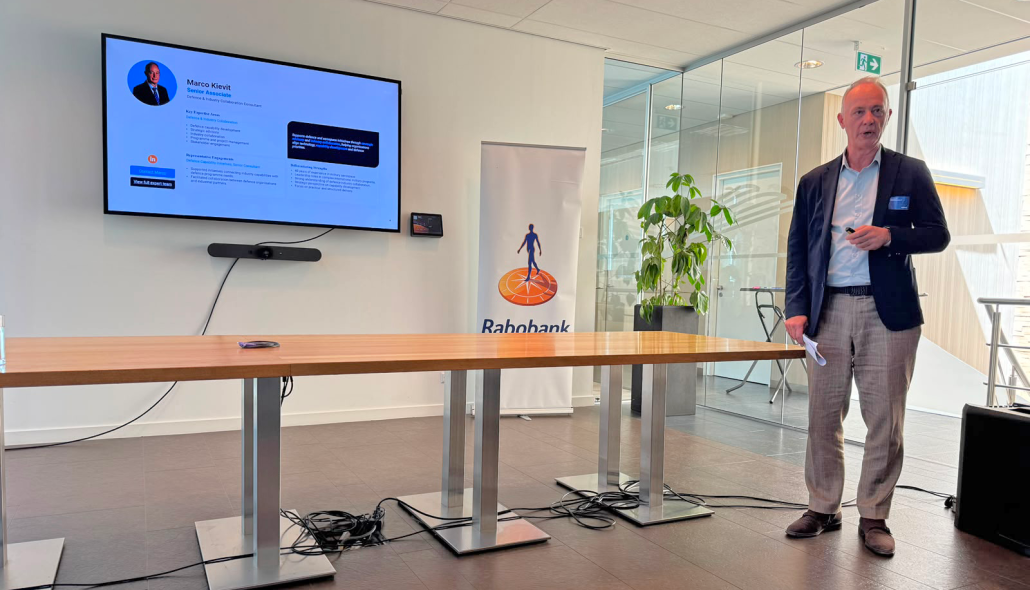
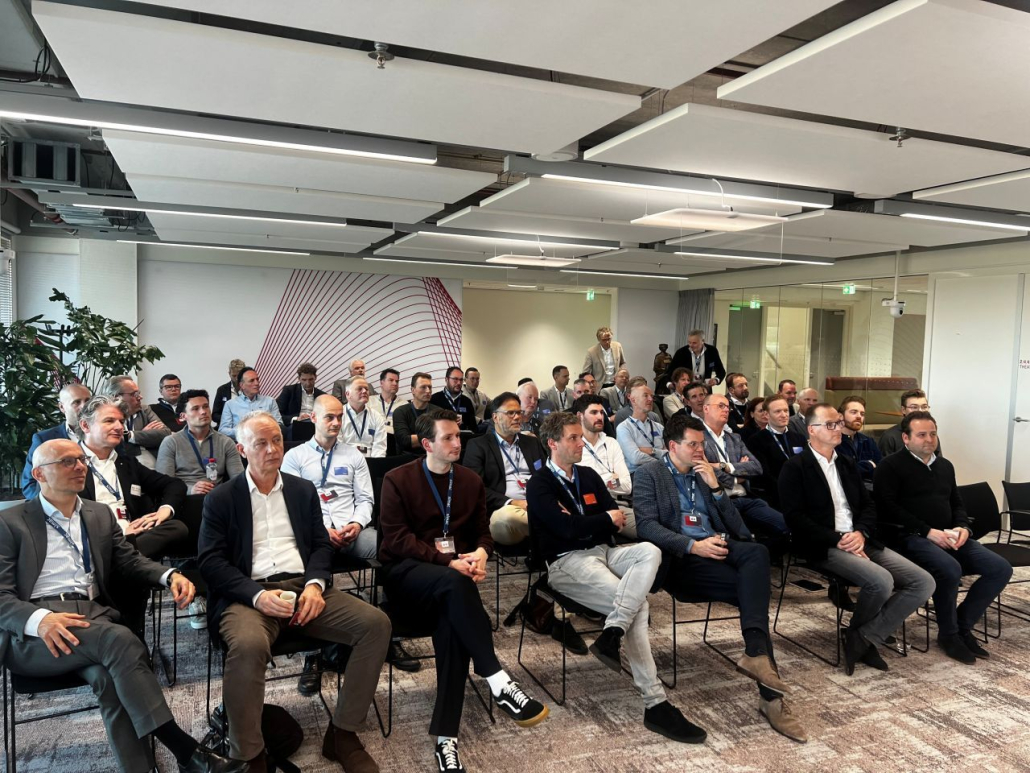
In February, we contributed to masterclasses organised by Rabobank together with Brainport Development and BITS, where we worked directly with companies exploring the defence landscape. In regions such as Brainport, we saw a strong demand for clear guidance. How does Defence operate, tender, and contract as a client, what does that mean for your organisation and its quality system and how do you prepare strategically? Through these sessions, one thing became clear. The willingness to contribute is there. Companies want to engage, but they are looking for direction to take that next step.


In early March, we continued these conversations in collaboration with partners across the ecosystem, where the same themes kept returning. Collaboration, readiness and positioning are not abstract concepts. They are immediate requirements for companies that want to move forward, being adaptive and scalable for the long-term partnership with MoD.


Collaboration as a foundation
Bridging ambition and execution while building strong ecosystems  

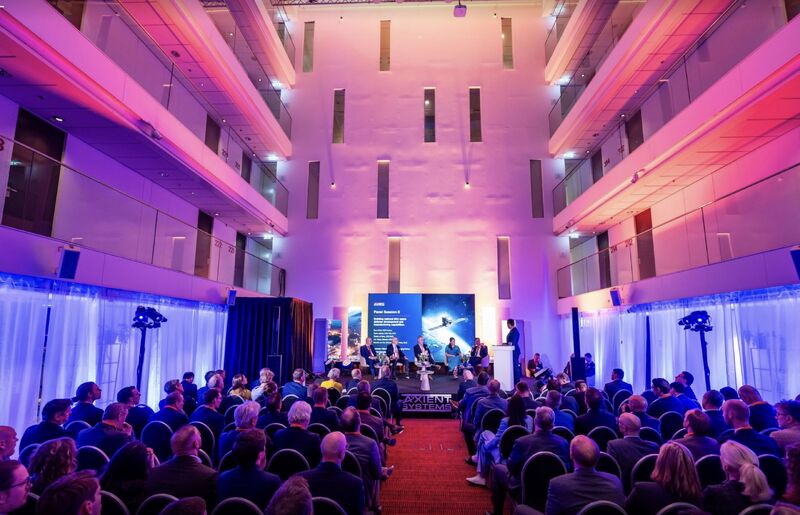
The Axient Systems BV’s new facility opening in Delft marks a significant step forward into building a national satellite capability, while creating export opportunities. What stands out from these interactions is that the conversation is shifting. It is no longer about technology alone, but about capabilities and how organisations work together to deliver them and accelerate by a national-European ecosystem approach.

Across all engagements, one message is consistent: progress depends on strong collaboration between industry, government and knowledge institutions. This becomes increasingly tangible in our day-to-day work with companies.

As is also reflected in recent coverage in De Telegraaf, the scale of the opportunity is clear, with significant defence budgets becoming available, while companies still face hurdles to access this market. 

As was also highlighted in a recent article in Het Financieele Dagblad, these barriers can seem daunting at first:  

“Before a company can even participate in certain tenders, it must meet a range of requirements. These can appear complex and sometimes intimidating for companies new to this market”.  

However, what we see in practice is that these barriers are often less prohibitive than they seem, provided companies understand what is required and how to position themselves. 

Our role is to translate that complexity into concrete steps, from understanding where a company fits in the value chain to preparing for the required standards and making the right strategic choices. 

Success in this market requires: 

  • insight in your place into the value chain 
  • preparation for quality requirements (e.g. ABRO and ISO 27001) 
  • strategic positioning 
  • defence tender and contracting support 

Sustainable business

This also connects to how we look at innovation more broadly. As I shared earlier this quarter in an interview on BNR Nieuwsradio, the real challenge is not only technological advancement, but the ability to move from concept to implementation:

“The biggest innovation is not a new aircraft, but accelerating certification and scalability”.

This is where real impact is created, by ensuring innovations can be scaled and implemented in practice, and by building the foundation for the next generation of capabilities.

This underlines the importance of not only developing capabilities, but ensuring they can be deployed, scaled and integrated within the defence ecosystem Take for example the Dash 8 operated by our coastguard, a perfect example of where a missionised platform securing our borders could soon become true sustainable.


From intent to implementation 

What stood out most to me in Q1 is the shift from interest to action.

We see more companies taking the first steps. Asking the right questions, engaging with the ecosystem and preparing for long term participation as a partner for our Ministry of Defence.

The next step is to turn that ambition into concrete action. Not tomorrow, but today.

This means investing in readiness, meeting the required standards and actively collaborating within the ecosystem.


Looking ahead 

We see momentum, not only in the market but in the companies we work with. Q2 will be about acceleration. Continuing to support organisations in their next steps, strengthening collaborations and turning ambition into long term execution. 

 “The opportunity is there. Now it is about delivering to sustainable capability to the men and women who need it the most”.  

Michel van Ierland
Managing partner Unified International 

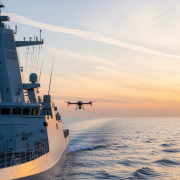
Modern naval vessel patrolling a calm sea at sunset, with a surveillance drone deploying above the ocean surface for a maritime security operation – AI-generated artist’s impression.

Naval vessels and UAVs: designing with tomorrow in mind

How do you ensure that naval vessels designed today remain operationally relevant in twenty or thirty years’ time? That question was central to an exploratory study carried out by Unified International on behalf of the Ministry of Defence. The study focused on the integration of (future) unmanned aerial vehicles (UAVs) on board naval vessels – and the impact this has on ship design. 

Collaborating parties 

The study was conducted by Unified International, commissioned by the Maritime Systems Division (AMS) within COMMIT (Materiel and IT Command) of the Ministry of Defence. 

To obtain a realistic and future-oriented perspective, Unified International brought together several viewpoints: 

  • Defence stakeholders, who contributed the operational context and future ambitions of the Royal Netherlands Navy 
  • International UAV manufacturers and suppliers, who provided insight into technological developments and market trends
  • The industry and integration perspective, in which Unified International applied its expertise in system integration and aviation systems

This combination made it possible to look not only at what is feasible today, but above all at what will be needed tomorrow. 

Approach and scope of the study 

The impact analysis examined: 

  • which functions a vessel needs to support UAV operations 
  • how different types of UAVs (VTOL, fixed-wing, heavy fuel, electric or hydrogen-powered) place different demands on ship design
  • how today’s design choices can enhance or limit the operational deployment of UAVs in the future 

The exploration combined information from desk research, interviews with industry parties, visits to trade fairs (including AUVSI Xponential) and a multidisciplinary validation session with Defence to arrive at a consistent overall picture. 

Results of the study 

The study helps Defence and ship designers to incorporate UAV integration from the outset in design and modernisation programmes, regardless of brand, system or type. Central to this are five so-called top-level functions that every vessel should be able to support: 

  1. Launch and recovery infrastructure 
  2. Energy supply 
  3. Storage and deck handling 
  4. Command & Control (C2) and data links 
  5. Maintenance facilities 

By considering these functions independently of specific UAV types or suppliers, insight is gained into which design choices are decisive now and where flexibility can be. retained for future developments.

This helps design teams and decision-makers to: 

  • identify dependencies and bottlenecks at an early stage
  • understand which choices are difficult or costly to change later 
  • make well-founded design decisions, even in the face of uncertainty about future UAV systems

Design choices with the future in mind 

The service life of naval vessels often extends to forty years, while UAV technology develops at a rapid pace. The war in Ukraine demonstrates how quickly innovations in unmanned systems can change military operations. Effective UAV integration requires alignment between vessel and aviation system, both technically and operationally. In practice, however, this rarely occurs: UAVs are usually applied ‘as-is’, without requirements for full onboard integration. This applies, for example, to launch and recovery systems and communication between UAV and vessel.  

If UAV integration is only considered after the design phase, this leads to: 

  • costly modifications
  • limitations in deployment
  • Or the complete exclusion of certain UAV concepts 

By incorporating UAV operations from the outset in ship design, naval vessels can: 

  • operate more effectively
  • deploy personnel more safely
  • adapt more quickly to future threats and technological developments 

The added value of the study lies not only in its content, but also in bringing together insights from both industry and Defence. 

The COMMIT study supervisor: “This study has helped us to approach UAV integration not as a separate addition, but as an integral part of future ship design. By bringing together different perspectives, we have gained a better understanding of the preconditions required to keep future vessels adaptive and operationally relevant”.


Beyond the headlines: What it really takes to win defence contracts

As European defence budgets continue to rise, Dutch companies are increasingly looking to capitalise on the wave of procurement opportunities ahead. But as a recent Financieel Dagblad article makes clear, securing defence contracts is far harder than it looks: Requiring long lead times, strict security and quality certifications, and the financial resilience to pre-fund significant upfront costs before any payment is received. 

Unified International’s Michel van Ierland features in the piece, highlighting the compliance complexity that can deter new entrants and the strategic value of joining a prime contractor’s supply chain rather than going it alone. With an estimated €41 billion potentially flowing to Dutch industry by 2030, the opportunity is real, but so is also the need for sound preparation and realistic expectations. 


Meet Willem – Building bridges between Defence and Industry from a new perspective

After a long career within Defence, Willem now brings his experience to Unified International. Where he previously operated from within government, he now works at the intersection of Defence, industry and private partners. With both operational and governance experience, he helps organisations translate complex challenges into practical solutions. We spoke with him about his motivation, experience and what energises him in his work.

What attracted you to Unified International and why did you decide to join?
Unified operates at the intersection of Defence and industry. Through my experience within Defence, I believe I can contribute to further strengthening Dutch Defence and supporting the development of the defence industry. What particularly appeals to me is the different perspective: no longer working purely as a government official, but acting as an intermediary between multiple stakeholders.
How does your previous experience help you in your current role at Unified?
After an operational career with the Royal Netherlands Navy, both at sea and in aviation, I further developed myself in governance and management roles. I know the Defence organisation well and have worked in finance, procurement and portfolio management. Managing complex governance processes within a political context has been an important learning experience throughout my career and those skills are highly relevant in my current role.
What important lessons from your previous roles do you bring into your work today?
One key lesson is that diversity within teams is crucial: the more perspectives involved, the greater the chance of success. I have also seen that risk management often remains underdeveloped in many organisations, particularly within government. Furthermore, as a leader, you must be a steady anchor while ensuring people do not follow you uncritically. Listening carefully and weighing decisions thoughtfully remains essential.
How do you use your international and governance experience to move organisations and projects forward?
By untangling complex problems and presenting them clearly. That means analysing situations, identifying possible solutions, and working them out further with teams. In addition, I use my knowledge of Defence and defence procurement processes to support potential suppliers in navigating tenders and partnerships.
What gives you the most energy in your work?
Colleagues, entrepreneurs and suppliers who are motivated and driven. People who see opportunities rather than threats and who are willing to take calculated risks without losing sight of reality.
How would colleagues and clients describe your way of working?
As a team player who does not hesitate to take the lead when necessary. I am always willing to help others and usually manage to find a compromise or solution that also gains broad support.
Which developments in defence or security do you currently find most interesting?
The rapidly changing geopolitical landscape, where the influence of the United States is shifting while China’s role continues to grow. At the same time, tensions between the US and Europe are putting alliances under pressure, forcing Europe to take greater responsibility for its own security. Fortunately, awareness of this necessity is growing rapidly.
What role can Unified play in the current changes within defence?
Making more funding available for Defence is one thing; translating that funding into actual capabilities has historically proven more difficult. Unified can play an important role here by acting as an intermediary between industry, private capital, and Defence organisations, helping to accelerate capability development and strengthen security.
What do you personally hope to further develop or contribute at Unified?
Strengthening Defence was always my number one priority during my military career. That remains the case today, only now from a different perspective.
What else should colleagues or clients know about you?
That I have broad interests and am always willing to help or think along, regardless of the topic. Outside work, I spend a lot of time on the water: I enjoy offshore sailing and also teach sailing on the Kaag lakes, so perhaps we’ll meet there this summer.

Meet Marco: Working at the Intersection of Defence and Industry

After a 40-year career in defence, Marco Kievit has joined Unified International to continue contributing to the sector from a new perspective.
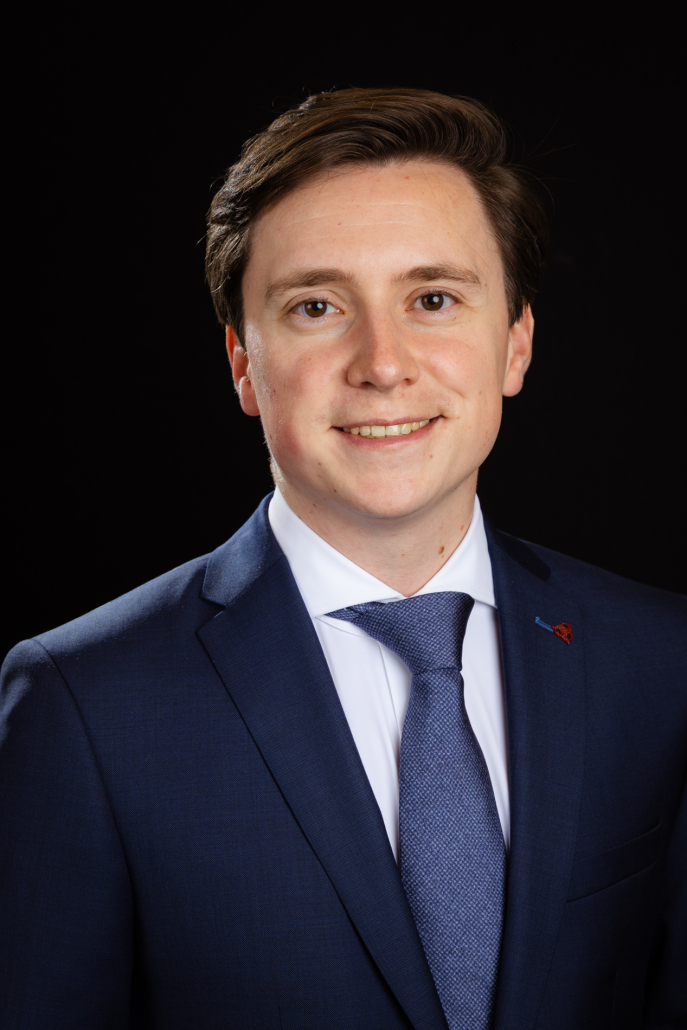
Drawing on extensive experience in international aviation programmes and operational and diplomatic roles, he now supports defence organisations and industry partners in working together more effectively in a rapidly evolving security environment.


What attracted you to Unified International and why did you decide to join?
I wanted to continue working in an environment closely connected to the knowledge and experience I gained during my defence career. Unified International’s focus on aviation and defence fits perfectly with that background. What really appealed to me is the enthusiasm and professionalism of the team and the way they genuinely prioritise the interests of their clients. Unified combines expertise with practical experience and is able to deliver real added value, which strongly appealed to me.

How do you see your role within Unified, based on your previous experience?
Unified works with a wide range of companies in the Netherlands and internationally. My background is mainly in project and programme management of complex aviation systems, but I have also worked in operational and diplomatic roles. I expect to be able to contribute across different areas, but I believe my main added value lies in helping clients identify where they can truly make a difference for a defence organisation.

What important lessons from your time as a project and programme manager do you bring into this new environment?
I have worked extensively in international programmes where cooperation is crucial. One important lesson is that cultural differences can easily become barriers if they are not recognised and managed properly. Another key lesson is the importance of multidisciplinary teams in complex programmes. Different perspectives can lead to more discussion, but ultimately leads to better solutions and stronger outcomes.

How do you hope to apply your international cooperation experience within Unified’s projects?
My experience working in international environments should help in building strong cooperation between different stakeholders. Currently, I am still getting to know Unified’s projects in more detail, so I expect my understanding of where I can best contribute will grow over time.

What gives you the most energy in your work?
I enjoy working in teams that set clear goals and work together to achieve them. The greatest satisfaction comes from overcoming challenges together and reaching the objectives you have set as a team.

How would you describe your way of working with colleagues and clients?
In defence, I grew up with the principle of one team, one task and I still strongly believe in that approach. It means paying attention to all team members, communicating openly and transparently and staying focused on achieving the objectives together.

Which developments in defence do you currently find most important or urgent?
Defence organisations need to grow rapidly while also modernising capabilities and incorporating lessons from current conflicts, such as the war in Ukraine. At the same time, Europe needs to become more self-reliant in defence matters. Meeting these challenges requires constant innovation and close cooperation between defence, industry and knowledge institutions. Defence cannot do this alone.

How do you see Unified’s role in this changing defence landscape?
Unified plays an important role as a connector between defence organisations and companies active in the defence sector. I am convinced that Unified can help both sides work together more effectively and contribute to solutions for the challenges they face.

What do you hope to learn and contribute at Unified, considering your operational and diplomatic background?
After 40 years working within defence, it is refreshing to now work from a company perspective. This brings new insights and challenges from which I can learn. At the same time, I hope to help translate defence needs more effectively for our clients and contribute to strengthening defence capability, something that still motivates me greatly.

What do you bring to the team and our clients, and is there something personal people should know about you?
I would not call them unique qualities, but I have broad experience across the defence domain. Having worked in political, operational, technical and logistical environments allows me to connect different perspectives and help organisations understand each other better.

On a personal note, my posting as Defence Attaché in Rome made me fall in love with Italy, its culture, landscapes, people, good coffee and of course ‘la cucina Italiana’.

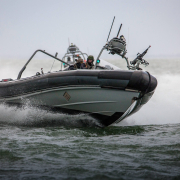
Meet Hein – Connecting Industry, Technology and Defence

At the intersection of innovation, strategy and collaboration, Hein brings a unique mix of technical insight and business acumen to Unified International. With a background in Business Administration and Change Management and experience spanning energy, high-tech and climate innovation, he now applies his expertise to strengthen national and European defence capabilities. Driven by curiosity and purpose, Hein helps bridge the gap between industry and government to create solutions that truly make an impact. 
 

What attracted you to Unified International and why did you decide to join?
Joining Unified International came at exactly the right time. In my previous work, I focused on tackling climate change by supporting the development of innovative solutions that make a real impact. Now I’m bringing that same combination of technical innovation and business funding into a new and equally important area: the defence sector. 

I’ve always had a strong interest in defence, business and technology, so being able to apply my experience to strengthen national and European defence capabilities feels both meaningful and motivating. For me, it’s about contributing to a better working defence force, a safer country and stronger collaboration between industry and government. 

Which lessons-learned do you bring from your previous experience and how will you apply them in your new role?
With a background in Business Administration and Change Management, I’ve always been interested in how strategy, innovation and people come together to create meaningful progress. In my previous roles, I advised on strategic and sustainable business growth and managed large national and EU public funding applications. That taught me to see the bigger picture, from market and operations to the legal and financial details that make a business case viable. 

Over the years, I’ve worked across a range of sectors including energy, software development, cloud computing, hydrogen, sensors and high-tech systems. This mix has given me a broad understanding of how innovation develops and scales in different industries and how technologies from one field can strengthen another. 

This experience helps me critically assess technical innovations and development roadmaps, which is essential for building stronger procurement strategies and tender applications. I’ve also learned how to connect government needs with industry capabilities, ensuring what’s being offered truly meets the demand or identifying what needs to change to make it fit. 

What gives you energy at work?
I get energy from working on projects that actually deliver impact and achieve their goals. Collaborating with motivated and positive colleagues who challenge and support each other makes work both fun and rewarding. 

What drives me most is being able to help clients find the insights they need, solve complex issues and genuinely add value to their work. 

Which themes or issues within defence do you find most interesting?
I’m fascinated by innovative solutions and integrated defence systems, the kinds of technologies that protect our people, assets and infrastructure. Defence today is increasingly about integration, foresight and collaboration. I’m excited to be part of that evolution. 

What do you hope to learn and contribute at Unified?
At Unified International, I’m looking forward to learning more about specific defence capabilities and how to better connect the industry’s strengths with the right networks inside the Ministry of Defence and vice versa. 

I also want to use my open and approachable style to bring people together across the defence ecosystem, while also introducing European funding opportunities that can help strengthen and modernise our defence force. 

Is there anything else you would like to share about yourself?
I’m a social and approachable person who enjoys connecting with others. I’m genuinely interested in people, ideas and learning something new every day. Outside of work, I like to stay active, whether that’s playing padel or tennis, hiking or skiing in the mountains. I’m driven and positive by nature and I value honesty and openness in how I communicate. I can be direct at times, but always in a friendly and constructive way, because I believe that’s how you build trust and get things done. 

What unique qualities do you bring to the team and, more importantly, to our clients?
At Unified, I combine strategic thinking, business acumen, analytical insight and technical understanding to help clients turn complex ideas into clear, actionable solutions. I enjoy bridging the gap between innovation, strategy and execution, making sure new ideas don’t just look good on paper but also make sense in practice. 

I’m curious by nature and not afraid to challenge assumptions. By asking the right questions and keeping a critical yet constructive mindset, I aim to help clients make well-founded decisions and achieve meaningful, lasting results. 

From Concept to strategic entry: How Unified International supported Reiger’s launch into the Defence Market

Earlier this year, Reiger Suspension, known for its expertise in high-performance automotive systems, embarked on a new journey into the defence sector with support from Unified International. This collaboration reflects the capability of the Dutch manufacturing industry contributing to Europe as well as NATO, combining technical excellence and strategic vision to meet defence requirements. By aligning proven engineering with strategic market entry, the partnership demonstrates how Dutch innovation can successfully transition into the defence landscape.

Building the partnership
The collaboration between Reiger and Unified International was initiated through a referral from an existing client. Reiger was drawn to Unified’s reputation for reliability, its structured project-based approach to tendering and market positioning and its in-depth expertise in the defence sector. These qualities proved to be decisive in forming the partnership.

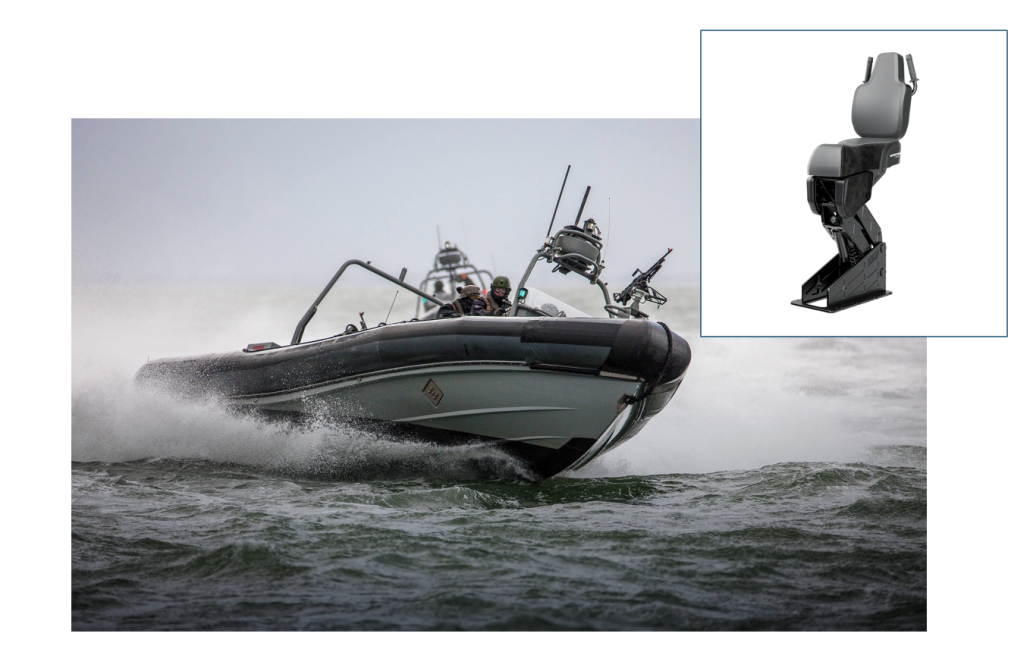
Positioning for defence successTransitioning from the automotive sector to the defence industry required a strategic repositioning of Reiger’s Seat Suspension Units (SSUs). Unified supported this move by adapting product design to meet strict defence requirements, developing a market introduction plan and guiding Reiger through the often complex defence tendering processes.

Our collaboration with Unified International was both effective and inspiring from the outset. Their structured approach and deep understanding of the defence market were invaluable. Within just a few weeks, we had a clearly defined proposition and a brand — all built from scratch — ready for a successful launch at SOFINS. Unified enabled us to transition from the automotive to the defence sector with confidence, speed and real impact. I look forward to continuing our partnership,” said Frans de Bruijn, CEO of Reiger Suspension B.V.

Crafting the market strategy
Unified also played a pivotal role in shaping the broader market strategy for the Defence Maritime Seating Systems. This included scoping the product portfolio, aligning brand identity with defence customers and introducing a marketing strategy developed through intensive BITSING sessions. Remarkably, this strategy was rolled out within just one month and quickly demonstrated results at key trade shows.

Structured project delivery
At the core of the collaboration was a structured, project-based approach focused on co-creation. Unified introduced clarity in product development, strengthened target group engagement and coordinated collaboration across internal and external stakeholders. Applying its ISO 9001-certified tender procedure, Unified guided the process from start to finish, ensuring Reiger secured a crucial tender win.

Following this success, Unified managed the contractual agreements to ensure a seamless transition from the old system to the new SSUs. Over 500 units have since been delivered to two European defence special forces, already in active use on their FRISCs.

Strengthening ecosystems and innovation
The partnership also reinforced broader defence ecosystems, particularly within the Netherlands. By integrating Dutch and German technologies, the SSUs were optimised for performance and soldier safety, reducing injury and fatigue in demanding operational environments. Locally manufactured components further strengthened the Dutch industrial base, combining innovation with economic impact.

“This collaboration exemplifies how engineering excellence and strategic market insight can align to deliver solutions that truly meet the end-user’s needs, says Stephen Hands, from Unified International”.


Visibility at SOFINS and beyond
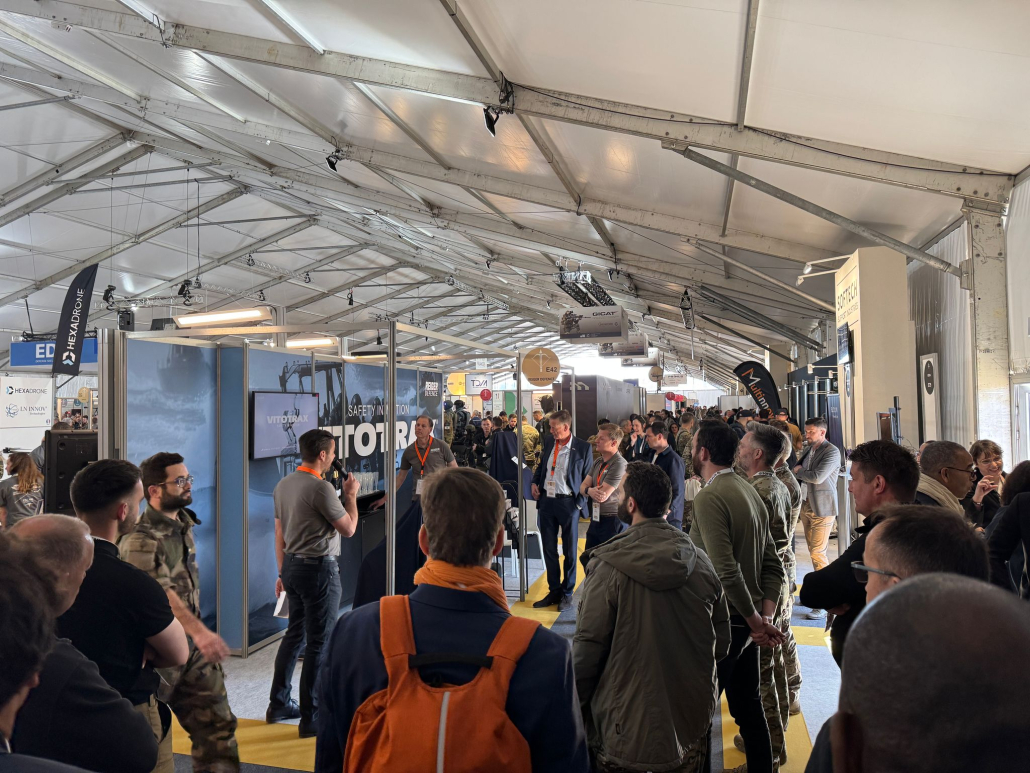
The product’s launch at SOFINS was a milestone in Reiger’s defence journey. Unified ensured visibility through targeted pre-event positioning and branding efforts, contributing to the strong reception. The branding process, supported by creative partners, positioned Reiger more effectively within the defence industry and set the stage for continued growth.

An ongoing partnership
This collaboration effectively fused advanced engineering with deep market insight, resulting in a significantly enhanced product tailored for defence. It also marked the beginning of an ongoing partnership.

Unified International is proud to have supported Reiger in establishing a firm foothold in one of the most complex and competitive sectors: defence. Within just four weeks, strategic ambitions were transformed into a tangible brand identity, complete with a style guide, website and full suite of marketing materials to support the SOFINS launch.

The success of Reiger’s market entry stands as a testament to the power of cross-sector collaboration and Unified’s ability to rapidly turn vision into operational reality.